 |
 |
 |
 |
 |
 |
 |
 |
 |
©2010 Rivermont Records. All rights reserved.
This page was last modified on 5 August 2010.
|
|
 |
 |
'CILE TURNER
Makin' Glory
Rivermont BSW-3135
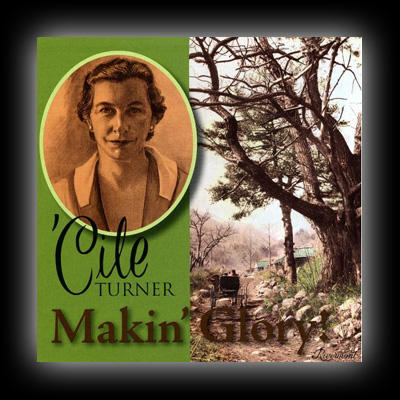 For years, the name 'Cile Turner has been a curious mystery to rock 'n' roll record collectors around the globe. In the past three decades, her 1959 recording of "Crap Shootin' Sinner" has been reissued on several notable compilations of early rockabilly and rhythm 'n' blues records (one of them colorfully titled T-Bird Party: A Swangin' Slew O' Greasy R&B), leading some on the internet to speculate that she was an obscure African-American singer of "gritty blues" who lived hard and died young. Collectors as far away as Europe, South America, and Japan regularly snap up used copies of her records when they are offered for sale, occasionally at prices stretching into the triple digits. Many of them may not know much about the woman behind the records, but they recognize the quality and uniqueness of her music. One reviewer recently wrote of Turner's music: "I love listening to it and have never heard anything quite like it."
In a career that spanned from the 1920s to the 1970s, Turner established herself as versatile performer: she was a historian, storyteller, and consummate musician. She composed, sang, and played a number of instruments including piano, guitar, drums, pots, pans, and anything else she might find useful--and she did it all with exceptional skill. Throughout her life, she was particularly drawn to the folk music of African-Americans and for a time became nationally known as one of the music's foremost experts and performers, appearing on records, radio, television, and at the White House. As a white "Virginia lady" championing the music of African-Americans in the still-segregated South, Turner challenged conventional assumptions about women's roles in society in the early twentieth century to pursue her passion for black folk music. As a young woman, she frequently found herself at odds with her parents, who disapproved of her performing career, thinking that a woman's place was in the home. Still, Turner's passion for the music and love of performing drove her to continue her efforts.
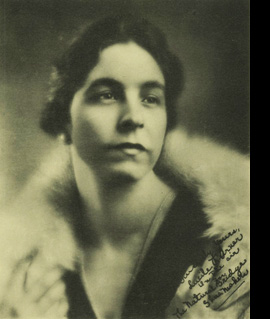 Lucile ('Cile) Turner was born in Southside Virginia in 1895. As a child, she showed a strong affinity for music and the theater, so at the age of 13 her parents sent her north to study piano and voice at the New England Conservatory of Music. Within a short time, she attracted attention from outside the Conservatory for her singing of African-American folk songs and spirituals. In the 1920s, she began traveling, singing the songs she had learned as a child. By 1930, she was starring in her own popular coast-to-coast radio program on NBC (heard Friday evenings just after Amos 'n' Andy on the same network). She made regular tours of the country throughout the 1930s and into the 1940s. In 1947, she made her first commercial recordings, a set of three 78 rpm records called "Blue Jeans." Soon thereafter, she signed a contract with Colonial Records and cut a full length LP and a handful of 45 rpm records, many featuring Elvis Presley's back-up vocal group, The Jordanaires. Several of her records, including "Crap Shootin' Sinner" and "The Golden Rule" became minor hits in 1959 and 1960, reaching the Top 40 popular music charts in several major cities. Turner continued to travel and perform until the late 1960s. She died in 1979. Lucile ('Cile) Turner was born in Southside Virginia in 1895. As a child, she showed a strong affinity for music and the theater, so at the age of 13 her parents sent her north to study piano and voice at the New England Conservatory of Music. Within a short time, she attracted attention from outside the Conservatory for her singing of African-American folk songs and spirituals. In the 1920s, she began traveling, singing the songs she had learned as a child. By 1930, she was starring in her own popular coast-to-coast radio program on NBC (heard Friday evenings just after Amos 'n' Andy on the same network). She made regular tours of the country throughout the 1930s and into the 1940s. In 1947, she made her first commercial recordings, a set of three 78 rpm records called "Blue Jeans." Soon thereafter, she signed a contract with Colonial Records and cut a full length LP and a handful of 45 rpm records, many featuring Elvis Presley's back-up vocal group, The Jordanaires. Several of her records, including "Crap Shootin' Sinner" and "The Golden Rule" became minor hits in 1959 and 1960, reaching the Top 40 popular music charts in several major cities. Turner continued to travel and perform until the late 1960s. She died in 1979.
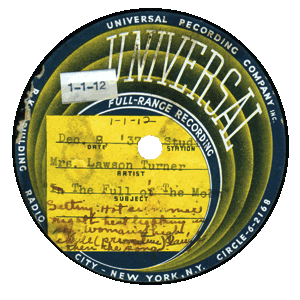 The first CD in this deluxe 2-CD set contains all of Turner's commercial recordings. The second disc contains 80 minutes of previously unreleased rarities, including alternate takes, radio broadcast excerpts, private recordings, and a live concert performance. The accompanying 32-page full-color booklet features over a dozen photographs and a comprehensive essay by Bryan S. Wright. The first CD in this deluxe 2-CD set contains all of Turner's commercial recordings. The second disc contains 80 minutes of previously unreleased rarities, including alternate takes, radio broadcast excerpts, private recordings, and a live concert performance. The accompanying 32-page full-color booklet features over a dozen photographs and a comprehensive essay by Bryan S. Wright.
'Cile Turner's music is a blend of traditional African-American folk music and rockabilly with a hint of blues. A reporter for TIME Magazine once wrote "Smoky-eyed Lucile Barrow Turner is the poised, ingratiating, slightly helpless-seeming epitome of Southern ladyhood. But when she cuts loose on a blues or 'shoutin'' spiritual, she gives the effect of a New Orleans barrel-house contralto." A columnist for the North Carolina News and Observer went so far as to say "Mrs. Turner sings like Bessie Smith, Ma Rainey, and a Negro spiritual choir all rolled into one."
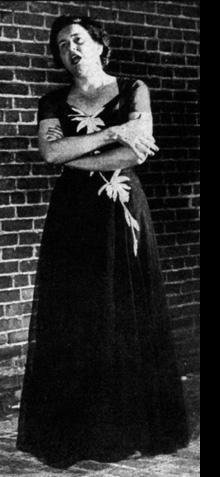 "Like Robert Burns, Lucile Turner shows how important and moving a simple art can become when it is in the hands of one who is deeply serious, deeply humorous, and a poet." -- James Boyd "Like Robert Burns, Lucile Turner shows how important and moving a simple art can become when it is in the hands of one who is deeply serious, deeply humorous, and a poet." -- James Boyd
"Mrs. Turner...brings to her art sympathy without bathos, sentiment without sentimentality. I was greatly moved by her roles. Mrs. Turner is a creative artist touched with genius." -- James Weldon Johnson
"Lucile Barrow Turner has an extraordinarily exciting voice, a perfect sense of rhythm, and a powerful instinct for the dramatic as well as a delicious humorous slant...She makes a decided contribution to folklore as well as to entertainment." -- John Mason Brown
158 minutes on two CDs. Recorded 1933-1962. |
|
 |
US $25.00
Your order will be processed by PayPal.
|
 |
|
|
 |
|
 |
|
| Click on the buttons to hear full-quality audio samples of selected tracks. |
|
|
| Disc One: Blue Jeans and the Complete Colonial Recordings
| |
| 1. | 
| Prayer | |
| 2. |
| Hammerin' | |
| 3. | | Full o' the Moon | 78 rpm version |
| 4. | | Crap Shootin' Sinner | 78 rpm version |
| 5. |
| One-Arm Tom | 78 rpm version |
| 6. | | Sat'day Night | |
| 7. |
| Drizzlin' Rain | 45 rpm version |
| 8. | | Full o' the Moon | 45 rpm version |
| 9. | | Full o' the Moon | LP version |
| 10. | | Midnight Train | |
| 11. | | All Night Long | |
| 12. | | A Thousand Years | |
| 13. |
| One-Arm Tom | LP version |
| 14. | | Sultry | |
| 15. |
| Drizzlin' Rain | LP version |
| 16. | | John Henry | |
| 17. | | Didn't it Rain | |
| 18. | | Crap Shootin' Sinner | LP version |
| 19. | | Old History's Walkin' | |
| 20. | | Crap Shootin' Sinner | 45 rpm version |
| 21. | | The Golden Rule | |
| 22. | | Going Down to Town | |
| 23. | | Don't Fool Around with the Blues | |
| 24. | | Joe Sweeney | |
| 25. | | In Virginia | |
| 26. | | The Happy Song | |
| 27. | | The Winds Call it Home | |
| 28. | | I'm Walking That Lonesome Road |
|
|
| Disc Two: Special and Previously Unreleased Recordings
| |
| 1. |
| Introduction by 'Cile Turner | |
| 2. |
| In Virginia | Alternative version |
| 3. | | Songs of the South | 09/14/1933 Radio broadcast |
| 4. | | Full o' the Moon | Private recording |
| 5. |
| Mississippi Streamline | Version 1 |
| 6. | | Mississippi Streamline | Version 2 |
| 7. |
| Prayer | Private recording |
| 8. | | Down by the Riverside | |
| 9. | | Mary Don't You Weep | |
| 10. | | Skunks | |
| 11. | | Don't Fool Around with the Blues | Demo |
| 12. | | Going Down to Town | Demo |
| 13. |
| Crap Shootin' Sinner | Live |
| 14. | | One-Arm Tom | Private recording |
| 15. |
| Workin' on the Building | |
| 16. | | Oh, Mammy! Look at Sam | |
| 17. | | Lay This Body Down / I Want to Go Home | |
| 18. | | Lo Cotton | |
| 19. | | Drizzlin' Rain | Private recording |
| 20. | | Go Down Death | |
| 21. | | Old History's Walkin' | |
|
|
 |
|
Credits:
Transfers and remastering: Bryan S. Wright / Liner notes: Bryan S. Wright / Photographs: Bryan S. Wright and Jones Memorial Library, Lynchburg, Virginia
|
|
|
|
|